
How AR VR Walkthroughs Boost High End Real Estate ROI with Film by Him Arch Viz Services

A luxury development can lose money long before construction begins. Not always because the design is weak, but because buyers, investors, and approval teams cannot fully understand what is being built from plans, still renders, and sample boards.
That gap matters most in high-end real estate. Premium buyers are not only buying square footage. They are buying views, arrival experience, ceiling volume, light quality, material finish, privacy, amenities, and a very specific lifestyle. If those details stay abstract, decisions slow down. Sales teams repeat the same explanations. Developers spend more on mock-ups, revisions, and site visits.
This is where immersive architectural visualisation earns its place. Well-made AR and VR walkthroughs help people experience a property before it exists physically. They reduce uncertainty, support faster decisions, and can cut avoidable costs across sales, design, approvals, and construction coordination.

Why high-end real estate needs more than static renders
Static renders still have value. They are useful for brochures, hoardings, website hero images, and investor decks. But they show selected angles. A buyer cannot walk from the lobby to the lift. They cannot test how the living room feels from the entrance. They cannot compare two kitchen finish options in real scale.
High-end developments need a stronger tool because the product is more complex and the risk is higher.
A premium apartment, villa, resort residence, branded residence, or luxury mixed-use project usually involves:
Higher ticket sizes and longer decision cycles
More stakeholders in every purchase decision
Greater dependence on finishes, views, and spatial feel
More design customisation requests
International or outstation buyers who may not visit often
Heavy marketing spends before project completion
In this context, AR/VR Walkthroughs help bridge the gap between technical drawings and buyer confidence. VR places the viewer inside a simulated environment. AR can overlay digital elements onto the real world, such as a unit layout on a physical site, a façade option on a model, or interior finishes inside an unfinished space.
The return does not come from novelty. It comes from removing friction.
Where the ROI actually comes from
The business case for immersive walkthroughs is strongest when teams track more than direct sales. A walkthrough can support the full development cycle, from concept approvals to post-launch sales.
ROI driver | How immersive walkthroughs help | Why it matters in luxury projects |
Faster buyer understanding | Buyers can move through rooms, amenities, terraces, and arrival spaces | Less time spent explaining plans and layouts |
Stronger pre-sales | Sales teams can present the project before a sample unit is ready | Earlier bookings can improve cash flow |
Lower mock-up dependence | Digital experiences can reduce the need for multiple physical setups | Physical sample spaces are expensive to build and update |
Fewer design misunderstandings | Stakeholders see scale, circulation, and material intent early | Changes are cheaper before procurement and execution |
Remote selling support | Buyers can experience the project from another city or country | Useful for NRI, investor, and second-home segments |
Better approval communication | Authorities, investors, or landowners can understand the proposal faster | Visual clarity reduces back-and-forth |
Faster sales conversations
A floor plan asks buyers to imagine. A walkthrough shows them what the plan feels like.
In high-value sales, this can reduce repeated explanations around room sizes, view corridors, parking arrival, lift lobby privacy, or amenity access. Sales teams can use the walkthrough to guide a consistent story, from the entrance gate to the residence interior.
That consistency matters. Without it, each sales executive may explain the project differently. A high-quality walkthrough gives everyone the same visual reference.
Better pre-launch and off-plan selling
Many luxury projects begin sales before the structure is complete. At that stage, the buyer is paying for trust. A polished 3D experience can make off-plan sales easier because it shows the finished vision with spatial context.
This is especially relevant in India’s premium real estate markets, where buyers often compare multiple under-construction projects. If one project can clearly show lobby scale, clubhouse flow, unit interiors, landscaping, and sunset views, it has a stronger presentation advantage.
Fewer expensive changes later
Design changes cost less when they happen early. Once civil work, MEP coordination, façade procurement, millwork, or imported finishes enter the picture, revisions become expensive.
A VR walkthrough can reveal issues that drawings may hide from non-technical stakeholders:
A corridor feels too narrow for the intended luxury positioning
A ceiling feature looks heavy when experienced at eye level
A furniture layout blocks circulation
A view promised in sales material does not align with the actual orientation
A lighting design feels flat in a key amenity space
Catching these details before execution can protect both budget and brand perception.

What a high-value AR or VR walkthrough should include
Not every walkthrough delivers ROI. A weak walkthrough can look flashy but fail as a sales or design tool. For high-end real estate, the experience must feel accurate, refined, and easy to navigate.
Spatial accuracy
The model should respect real dimensions. Doors, ceiling heights, window sizes, corridors, furniture, and terrace depths must feel true to scale. If a walkthrough exaggerates space, it may create disappointment later.
This is why teams often connect visualisation workflows with BIM or CAD data. 3D BIM Modeling can support better coordination between design intent and built form, especially when the project has complex structure, services, façade elements, or premium interiors.
Material realism
Luxury buyers notice surfaces. Marble veining, timber grain, metal finish, glass reflectivity, fabric texture, and lighting temperature all affect perceived value.
A good walkthrough should not treat materials as generic colours. It should show how finishes behave under daylight and artificial light. This is important for spaces such as show kitchens, bathrooms, lift lobbies, spas, clubhouses, and penthouse terraces.
Clear navigation
The experience should guide the viewer without confusion. Some projects need a free-roam VR experience. Others work better as a guided cinematic walkthrough. In sales environments, guided flow often works well because it keeps attention on the project’s strongest features.
For AR, the interface should be simple. Buyers should not need technical training to view a unit, rotate a model, or compare finish options.
Realistic lighting and atmosphere
Lighting sells space. A sea-facing apartment at sunrise feels different from the same apartment at night. A clubhouse with cold flat lighting can look ordinary, even if the design is strong.
The best walkthroughs use lighting to communicate intent, not to hide flaws. Day scenes, evening scenes, and amenity mood scenes can all serve different sales goals.
Device-ready delivery
A walkthrough built for a headset may not perform well on a mobile device. A file built for a sales gallery may not load smoothly on a website.
Teams should define delivery formats early:
VR headset experience for sales suites
Web-friendly interactive walkthroughs
Mobile AR previews
Large-screen presentation films
Short clips for launch campaigns
Project trailers and Promo's for marketing use
The right output mix makes the investment work harder.
A practical way to calculate payback
The payback calculation should include both revenue impact and cost avoidance. Exact numbers vary by city, project size, visual quality, scope, and technology stack, so the best approach is to build a project-specific model.
A simple structure works well:
Payback value = added sales benefit + cost savings + risk reduction value
Then compare it with:
Total visualisation cost = modelling + animation + AR or VR development + revisions + deployment
For example, a developer may estimate benefit across these areas:
Earlier bookings
If immersive presentations help close even a small number of premium units earlier, the cash-flow benefit can be meaningful. This is especially relevant when inventory value runs into crores.
Reduced physical mock-up revisions
A sample apartment or sales gallery can be expensive to build, furnish, revise, and maintain. Digital versions allow multiple finish options without rebuilding physical spaces each time.
Lower travel and presentation costs
Remote buyers, NRI investors, and channel partners can experience the project without repeated site visits. This does not replace site visits completely, but it can qualify interest before travel.
Fewer late-stage design changes
Even one avoided rework package in premium interiors, façade articulation, or amenity planning can offset a large part of the visualisation cost.
Improved sales team productivity
If sales executives spend less time clarifying basic layout questions, they can focus on buyer fit, payment structure, configuration choice, and closing.
The ROI discussion here is informational, not financial advice. A developer should evaluate payback using actual project costs, sales velocity, inventory value, and construction timelines.

How immersive walkthroughs support different project stages
AR and VR are often seen as marketing tools, but their value starts earlier.
Concept and investor presentations
Before launch, a developer may need to align landowners, investors, consultants, or internal teams. Drawings and spreadsheets explain feasibility. Visualisation explains ambition.
A concept walkthrough can show massing, arrival sequence, amenity zoning, landscape intent, and unit experience. This helps decision-makers approve direction with fewer assumptions.
Design development
During design refinement, walkthroughs help teams test proportion and usability. BIM-linked visualisation can make this process more reliable because geometry comes from structured project data.
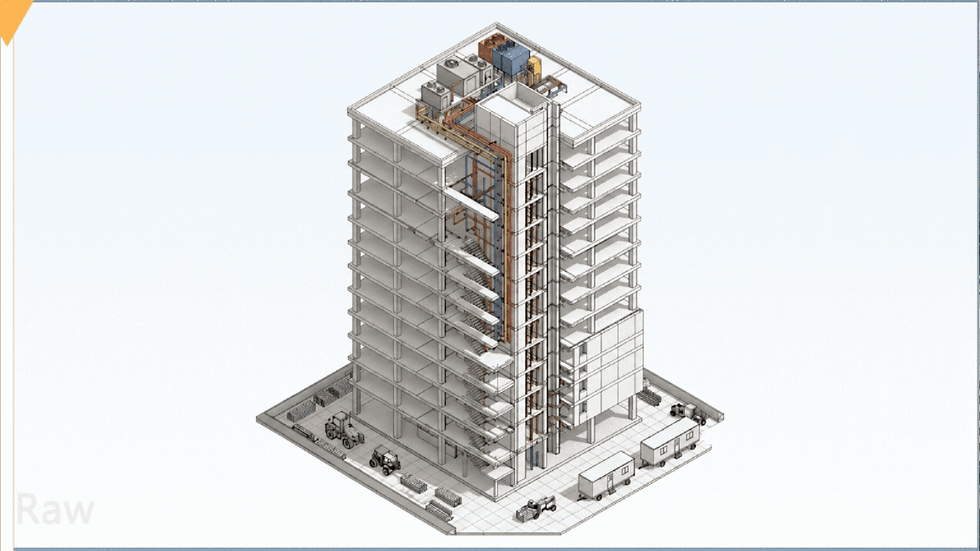
3D BIMAnimations can also explain construction sequencing, service routing, façade installation, or infrastructure systems. This is valuable for complex real estate developments where design coordination affects cost and timelines.
Sales launch
At launch, the walkthrough becomes a persuasive sales asset. It can sit inside a sales gallery, play on a large screen, support channel partner pitches, and help remote prospects experience the project.
This is also where 3D Walkthrough Videos and project films matter. Not every buyer will wear a headset. A cinematic walkthrough video gives the same visual story in a format that works on screens, events, and digital platforms.
Construction and engineering communication
Engineering Animation Videos can explain technical systems better than static diagrams. For example, they can show basement ventilation, traffic movement, bridge connections, façade cleaning systems, MEP routes, or construction methodology.
These assets are useful for internal coordination, authority discussions, contractor communication, and stakeholder education.
Post-sale buyer experience
After booking, immersive content can help buyers understand customisation choices. Finish palettes, furniture layouts, lighting moods, and upgrade packages become easier to compare in a virtual environment.
This reduces confusion and improves confidence during the long period between booking and handover.
Common mistakes that reduce ROI
Immersive technology pays for itself only when the content matches the business goal. Several mistakes can weaken the return.
Treating the walkthrough as decoration
A walkthrough should answer buyer questions. It should show what matters: entrance sequence, view, privacy, room flow, amenity access, parking arrival, and finish quality.
If it only shows dramatic camera moves, it may look impressive but fail in actual sales conversations.
Building late in the process
If the walkthrough starts after most design decisions are locked, it can still help marketing, but it loses design-stage value. Starting earlier allows the asset to support approvals, coordination, and decision-making.
Ignoring technical performance
A beautiful experience that lags, crashes, or takes too long to load will hurt presentation quality. File size, device type, frame rate, and interaction design should be planned from the start.
Overpromising the final product
Visualisation must stay honest. If the built project cannot deliver the shown view, room size, finish, or feature, the walkthrough can create trust issues. Accuracy protects the developer as much as it persuades the buyer.

Why Film by Him fits the one-stop arch viz need
High-end real estate visualisation works best when the output feels consistent across every touchpoint. A buyer should see the same design language in the walkthrough, trailer, BIM animation, amenity film, and sales presentation. Fragmented vendors can make that difficult.
Film by Him provides Architectural visualization services as a complete production partner for developers, architects, real estate brands, and construction teams. The aim is simple: turn complex unbuilt spaces into clear, accurate, and emotionally strong visual experiences.
The team supports a full range of Arch viz services, including:
3D Walkthrough Videos for sales galleries, launches, websites, and investor presentations
3D BIM Modeling to create structured, coordinated digital building assets
3D BIMAnimations for construction sequencing, design explanation, and technical communication
AR and VR Walkthrough Videos for immersive buyer and stakeholder experiences
Engineering Animation Videos for infrastructure, MEP, construction, and system-level explanation
Project trailers and Promo's for launches, teasers, campaign films, and premium project storytelling
That mix matters because high-end developments rarely need just one render or one video. They need a connected visual system that can support design, marketing, sales, and technical communication throughout the project lifecycle.
For developers planning a luxury residential tower, villa community, resort residence, mixed-use asset, or premium commercial space, the right visualisation partner can help the project sell earlier, communicate better, and avoid costly misunderstanding.
Explore Film by Him’s full range of architectural visualisation solutions here: connect with the Film by Him Arch Viz team.
The real payback is confidence
AR and VR walkthroughs pay for themselves when they reduce uncertainty. They help buyers understand value, help sales teams communicate clearly, help developers test decisions early, and help technical teams explain complex work before money is spent on site.
For high-end real estate, that clarity is not a nice extra. It can protect margins, improve sales velocity, and strengthen trust in the project vision. The strongest returns come when immersive visualisation is planned early, built accurately, and used across the full development journey rather than treated as a last-minute marketing asset.
Your Next Big Dream Project Deserves Better Than Average ArchViz. Let’s Connect and Make It Unforgettable.


Comments