
Mirzapur The Movie Review Masterclass or Cash Grab Positives Negatives and Post Production Insights

A web-series phenomenon moving to theatres is always risky. The bigger the fandom, the sharper the question becomes: did this story need a movie, or did the makers simply see a brand strong enough to sell tickets?
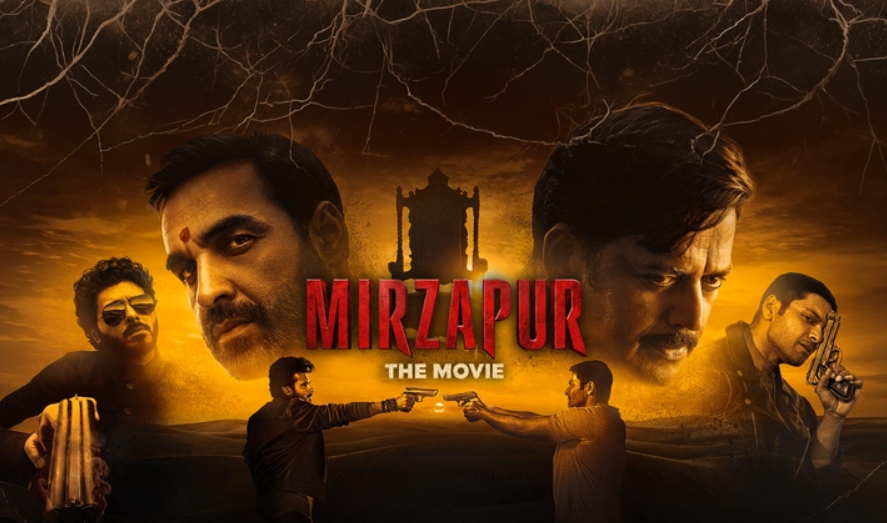
With three massive seasons behind it, Mirzapur: The Movie walks into that exact fire. The world is familiar, the power games are known, and the audience already carries strong loyalties. A weaker film could have easily felt like an extended episode with a bigger screen. A louder film could have treated cinema as an excuse for random explosions, slow-motion entries, and empty fan service.
This one does something smarter.
It keeps the grime, threat, dark humour, and local flavour that made the series work, but gives the narrative a theatrical pulse. The result is a gripping, high-energy crime drama that feels worthy of its format. It is not flawless, and its three-hour runtime does ask for patience in places, but the film does enough to prove that this leap from streaming to theatres was not just a cash grab.
The Mirzapur movie justifies its theatrical existence
The biggest compliment one can give Mirzapur: The Movie is that it does not feel unnecessary.
That may sound simple, but it is a serious achievement for a franchise already rich with characters, betrayals, deaths, grudges, and political games. After three seasons, the easy route would have been to recycle old tension. Bring back familiar faces, add a few big dialogues, stage a violent climax, and rely on audience memory to do the rest.
The film avoids that trap by giving the story a proper cinematic structure. It does not merely stretch a season arc into a theatre release. It builds a fresh conflict with higher stakes, while still respecting the emotional baggage viewers bring from the series.
The world of MIRZAPUR has always worked because its violence feels personal. Power is not abstract here. It sits in homes, police stations, godowns, political offices, weddings, funerals, and cramped rooms where one wrong word can change a life. The movie understands that. Even when the scale grows, the tension stays local and grounded.
That is why the theatrical experience lands. The film feels bigger, but not fake. The guns are louder, the confrontations are sharper, and the stakes feel heavier, yet the soul remains the same.
Nostalgia is used well, not lazily
Franchise films often lean too hard on nostalgia. They pause for applause. They bring back old lines without purpose. They treat fan recognition as storytelling.
This film uses nostalgia with more control.
The familiar atmosphere is there from the start. The tone, the moral greyness, the gallows humour, the sharp exchanges, and the constant feeling that betrayal is around the corner all make long-time fans feel at home. The return of core characters carries weight because the film knows what they represent.
At the same time, it does not behave like a closed club.
New viewers may not catch every emotional echo, but they are not abandoned. The film provides enough context through behaviour, conflict, and dialogue to understand who holds power, who wants revenge, and who cannot be trusted. It does not stop the story to explain everything, which is a good thing. Instead, it lets the audience learn through motion.
That balance matters. A theatrical film cannot depend only on existing fans. It needs to work as a complete viewing experience. Here, the film largely succeeds.
The three-hour runtime works better than expected
A three-hour crime drama can easily become exhausting. With a universe as dense as this one, the danger grows. Too many subplots can weaken tension. Too many characters can reduce emotional impact. Too many action blocks can turn menace into noise.
The movie stays surprisingly tight for most of its length.
The pacing works because the film understands rhythm. It gives the audience bursts of tension, then lets characters breathe. It spaces out its major confrontations instead of stacking them too close. The quieter scenes are not filler. They usually reveal fear, ambition, loyalty, or calculation.
The best parts are not always the biggest scenes. Some of the strongest moments come from silence, eye contact, and the sense that a character is measuring the cost of their next move.
That said, the runtime is not invisible. A few stretches in the middle could have been shorter. Some transitions linger longer than needed. One or two character beats repeat what the audience already understands. The film remains engaging, but a tighter cut could have made it even more forceful.
Still, the fact that a three-hour film in this space keeps its grip is a win.
The performances keep the world alive
A crime saga of this kind survives on performance. Plot matters, but presence matters more. The characters need to feel dangerous even when they are seated. They need to carry history in their body language. They need to make casual lines sound like warnings.
The core cast delivers that familiar charge.
The returning faces bring the same magnetic energy that shaped the series. Their performances do not feel like repetitions. They understand that the characters have changed through loss, victory, humiliation, and time. Some carry more fatigue. Some carry more rage. Some hide fear behind arrogance. That layering helps the movie feel like a continuation rather than a reunion.
The new characters also make an impact.
This is where the film deserves special credit. New additions in a beloved franchise often struggle. If they are too weak, they look like decoration. If they are too dominant, fans reject them for taking space from the originals. Here, the new characters bring power and fresh tension without overshadowing the established players.
They shift the dynamics. They force reactions. They make the older characters adjust, which keeps the drama alive.
The humour also remains organic. It comes from personality, not forced punchlines. In a world filled with bloodshed and ego, the occasional absurdity feels natural. That has always been one of the franchise’s strengths, and the movie protects it.
The dialogue is still sharp without becoming parody
The franchise has always had a strong relationship with dialogue. Its lines are often blunt, crude, funny, threatening, or all of these at once. That creates a challenge for the film. Push too hard, and every scene becomes a quote-delivery contest. Hold back too much, and the world loses flavour.
The movie mostly finds the right zone.
The dialogues feel rooted in the characters. They are theatrical enough to play well in cinemas, but not so polished that they lose the rough edge of the setting. The language carries power. It also carries class, region, ego, and insecurity.
The best lines do not feel written only for applause. They reveal intent. A joke can signal dominance. An insult can expose fear. A calm sentence can feel more dangerous than a shouted threat.
That is what separates memorable crime writing from empty swagger.
The direction respects the source material
The direction is confident because it knows what to change and what to keep.
The film expands the canvas, but it does not clean up the world. It does not make the characters too heroic. It does not soften the moral rot. It does not turn the setting into a glossy action playground. The grime remains. The danger remains. The sense of law being present but weak also remains.
At the same time, the staging feels more cinematic. Scenes have a wider physical scale. Entrances carry more weight. Action has more impact. The camera gives certain moments room to breathe in a way streaming sometimes does not.
The directorial win lies in restraint. The film could have gone bigger in every direction, more violence, more style, more noise. Instead, it chooses intensity over excess. That choice keeps the movie connected to what made the original series popular.
Is it a masterclass or a cash grab?
The honest answer is that it is much closer to a masterclass than a cash grab.
Not because every scene is perfect. Not because the film has no flaws. It works because it understands the responsibility of carrying a well-loved story into a different format.
A cash grab usually shows its laziness quickly. It depends on the title. It brings back familiar elements without emotional purpose. It assumes fans will be satisfied with recognition alone.
This movie does more than that.
It gives fans the familiar thrill they came for, but also offers a new dramatic engine. It respects the world, pushes the stakes, and adds enough fresh energy to justify the ticket. For casual viewers, it still plays as a strong crime drama with clear tension and strong performances.
That makes it a proper paisa-vasool entertainer.
Positives and negatives from a post-production perspective
The film’s post-production plays a major role in making the transition from web to theatre feel successful. A crime drama can collapse in the edit if scenes run too long, if action lacks geography, or if sound fails to carry tension. Here, the post-production team gets many big things right.
Post-production positives | Where it could be better |
Editing keeps the narrative moving. The film handles multiple characters and power shifts without becoming confusing for most of the runtime. | The middle section could be leaner. A few scenes repeat emotional beats and could have been trimmed for a sharper second half. |
Sound design adds weight. Gunshots, footsteps, vehicles, silences, and room tone help build pressure without depending only on background music. | Some dramatic cues feel slightly familiar. A more unpredictable sound palette could have made a few tense moments hit harder. |
Colour grading protects the gritty mood. The visuals retain the earthy, harsh, lived-in feel associated with the franchise. | A few scenes could use more visual contrast. Certain darker sequences may feel too similar in texture, reducing the impact of key moments. |
Action editing stays grounded. The film avoids making violence feel cartoonish, which suits the world. | Some action beats need cleaner spatial flow. A few moments could benefit from clearer cuts that show where every character is positioned. |
Dialogue mixing is mostly strong. The sharp lines land well, and the performances remain clear even in tense scenes. | Crowded scenes could have more separation. In high-noise moments, cleaner layering would help every detail breathe. |
The strongest post-production choice is the film’s refusal to turn chaos into clutter. The edit usually knows when to cut away, when to hold, and when to let silence do the work. That is essential for a story where threat often sits beneath the dialogue.
The background score also supports the mood instead of overpowering it. It rises when needed, but the film does not use music as a crutch for weak tension. That gives the actors space.
The colour grade feels loyal to the series. It carries dust, heat, shadow, and danger. It does not make the world look expensive for the sake of it. The frame still feels harsh and lived in, which is exactly what this universe needs.
What could have made the film even stronger
The film works, but a few improvements could have lifted it further.
A tighter second act would have improved the momentum. The early and final stretches carry strong energy, but the middle has moments where the film seems to pause longer than required. Keeping the runtime closer to a more compact shape could have made the theatrical experience even more gripping.
The action could also use slightly more visual clarity in select scenes. Grounded action is a strength, but grounded does not mean visually muddy. The best action lets the viewer understand space, danger, distance, and consequence. When every cut carries purpose, violence feels more painful and personal.
The sound design, while effective, could have taken a few more risks. The franchise has a strong identity, but a movie format gives room for bolder sonic choices. Silence, distortion, environmental sound, and sharper sound transitions could have made some scenes feel even more memorable.
These are not deal-breaking flaws. They are refinements. The foundation is strong.
Why post-production can decide whether a franchise film works
A film like this proves how much post-production shapes audience response.
The writing and performances may create the raw material, but the final impact comes from the edit, sound, colour, music, and finishing. Post-production decides whether a three-hour film feels heavy or gripping. It decides whether action feels chaotic or controlled. It decides whether a dramatic pause feels powerful or slow.
For filmmakers, creators, and production teams, that lesson is valuable. Strong footage still needs careful shaping. The right editor can find rhythm. The right colour grade can define mood. The right sound mix can turn a simple room into a place full of threat.
If you are working on a film, web series, music video, ad film, or branded project and want that level of finishing, explore Film by Him post-production services. From editing and colour grading to sound-focused finishing, professional post-production can help your footage feel complete, polished, and ready for its audience.
Final verdict
Mirzapur: The Movie is not just a brand extension. It is a confident theatrical chapter that understands why people cared about this world in the first place.
It gives fans the grit, sharp dialogue, power games, humour, and danger they expect, while adding enough fresh conflict to avoid franchise fatigue. The performances hold the film together. The direction respects the source. The post-production gives the story scale without losing its grounded bite.
Yes, it could have been tighter. Yes, a few sound and edit choices could have been bolder. But the film delivers where it matters most.
It earns its place on the big screen, and more importantly, it proves that a streaming favourite can become a real theatrical experience when the makers treat the material with care.

Looking for quality Post production services ??
Connect with us and get quality Post production services for your next project in your budget !!


Comments