
The Ultimate Guide to Architecture Visualization Services in 2026

Updated: Jun 30
Whether you are an investor bidding on a new development or an architect refining a concept, the ability to see a project before a single brick is laid is no longer just a luxury; it is a necessity. The days of relying solely on flat 2D floor plans to secure funding or win over clients are rapidly fading. Today, 3D architecture previsualization (often referred to simply as Archviz) has completely transformed how real estate and architectural designs are communicated, marketed, and finalized.
In this comprehensive guide, we will explore everything you need to know about the world of Archviz. We will break down the evolution from traditional drafting to modern tools, clarify the exact differences between still renders, BIM animations, and interactive VR walkthroughs, and explain why these visualization technologies present a massive opportunity for investor and buyer psychology.
Before we dive into the technical definitions and software comparisons, if you are actively looking for top-tier Arch viz services and want all of these capabilities handled expertly under one roof, you are in the right place. At Film by Him, we are a specialized post-production and 3D visualization agency dedicated to bringing your architectural concepts to life. From photorealistic 3D walkthroughs and high-end CGI services to fully immersive interactive videos, our team partners with developers and creative agencies to turn complex architectural plans into visually stunning, market-ready realities.
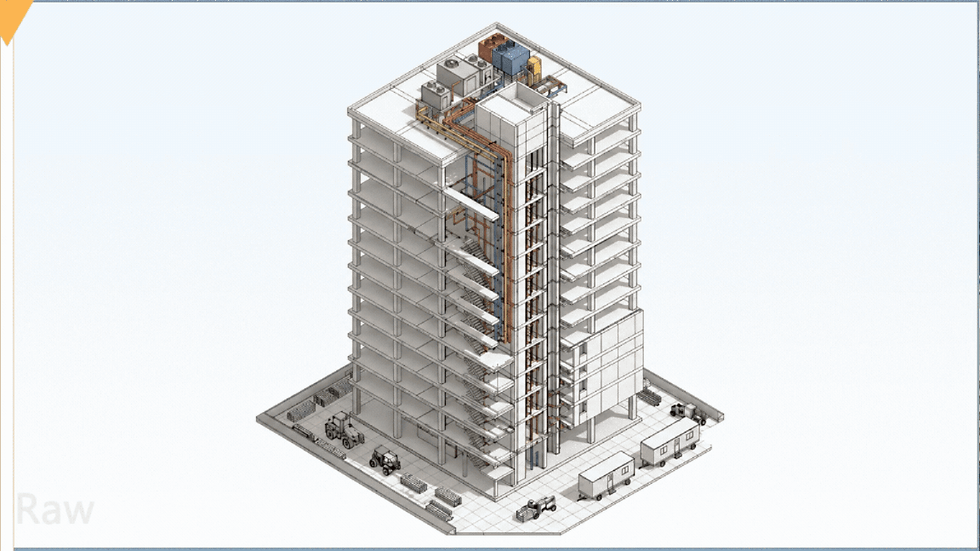
If you want to know exactly how these tools work and which type of visualization is right for your next project, let's start from the beginning.
What is Architecture Visualization?
At its core, architecture visualization is the art and science of visually communicating a proposed building or space before it exists in the physical world. It serves as a crucial bridge between complex, technical architectural data and human understanding.
Instead of asking an investor or a homebuyer to mentally construct a building from raw measurements and abstract lines, visualization shows them exactly how the space will look, feel, and function. It translates technical intent into emotional resonance.
The Evolution: Traditional Methods vs. Modern Archviz
To truly appreciate the power of modern visualization, it helps to look at where the industry started.
The Traditional Approach
Historically, architects relied on analog methods to present their designs:
Hand-Drawn Renders: Detailed ink sketches and watercolor paintings used to convey mood and aesthetics.
2D Blueprints: Flat, technical floor plans and elevations (often drafted in early software like AutoCAD).
Physical Scale Models: Elaborate, miniature representations painstakingly built from balsa wood, foam, and cardboard.
While these traditional methods required immense skill and artistry, they had significant limitations. Physical models were incredibly time-consuming and expensive to build. If a client wanted to change the layout or swap a material, you couldn't just hit "undo"; it often meant starting from scratch. Furthermore, flat 2D plans require a trained eye; a developer or homebuyer without an architectural background often struggles to accurately judge depth, scale, and lighting from a blueprint. The Modern Era
Today, the industry has shifted almost entirely to digital, data-driven visualization. The modern approach utilizes hyper-realistic
3D walkthrough animation services
3D architecture rendering services
Virtual reality architecture visualization
Photorealistic architectural rendering
Architectural CGI services
AI-assisted workflows
Real-time game engines.
The massive advantages are :
Lighting simulates real-world physics.
Material textures are indistinguishable from photographs.
Changes to a design can be rendered out in a fraction of the time.
Most importantly, modern visualization removes the guesswork.
Viewers no longer have to imagine the space—they can see it exactly as it will be built.
As always, if you want to hire expert hands for handling ArchViz for your next project, please have a look at our recent renders. https://www.filmbyhim.com/archviz
Let's get connected and discuss the details of your next big project's ArchViz.


It was so helpful to gather the information about ArchViz